Paper with Purpose: Rethinking How We Make Washroom Consumables
Sustainability often feels like a big-picture conversation — focused on carbon targets, headline-grabbing innovations, or massive system changes. But I believe some of the most impactful changes are the ones that happen quietly, in the background, and at scale.
That’s what’s been on my mind recently — the small, everyday decisions we make in our industry that can help shape a cleaner, more responsible future.
Take paper products, for example. Toilet rolls. Hand towels. Centrefeed wipers. They're seen as essential, disposable, and frankly… unremarkable. But that’s exactly why they deserve a closer look.
At Jangro, we’ve been asking tougher questions:
What are these products made from? How are they transported? Where do they end up?
And more importantly: What could we be doing better?
Introducing the ntrl Paper Range
Our new ntrl paper range is part of a wider shift — not just in products, but in thinking. It’s about moving away from default, legacy choices and towards purpose-led design. Every part of this range has been developed to support a more circular, lower-carbon future — without compromising quality or performance.
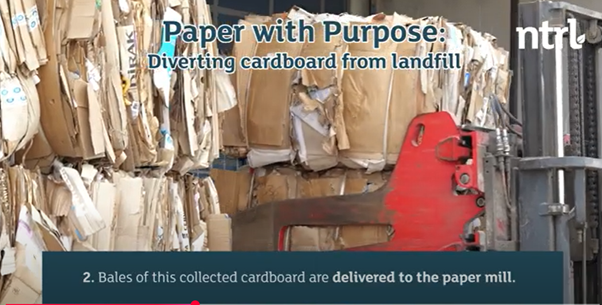
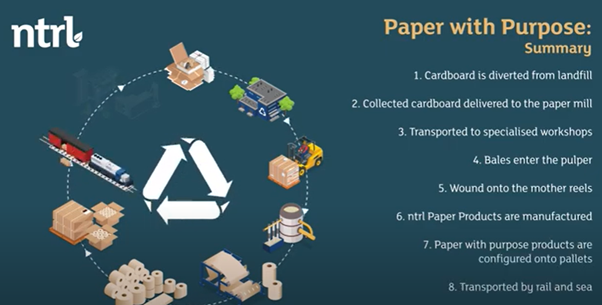
The material at the heart of the range is recycled cardboard. But not just any recycled cardboard — we’re talking about post-consumer and post-industrial sources that would otherwise head straight to landfill. Instead, they’re collected, sorted, and repurposed into usable paper using no bleach, no dyes, and significantly less water and energy than virgin pulp.
The result? A product that’s instantly recognisable by its natural, unbleached colouring — a visual reminder that sustainability can be simple, honest, and effective.
Designed for Impact
What makes this range different is not just what it’s made from — it’s how it's designed from start to finish.
We’ve worked with our manufacturing partners to:
- Ensure carbon lifecycle assessments for every product
- Optimise pallet configurations to reduce emissions in transport
- Use rail and sea freight wherever possible instead of road
- Package everything in fully recyclable, plastic-free materials
This is not about chasing perfection. It’s about being intentional, transparent, and always looking for ways to do better. That’s what sustainability in practice looks like — not a glossy promise, but a series of smart, measurable improvements made again and again.
Small Changes, Big Potential
When people talk about sustainability, it’s tempting to focus on the big wins. But often, it’s the quiet, repeatable changes that have the biggest impact over time.
Choosing a more responsible hand towel or toilet roll might not seem like a game-changer — until you multiply that choice across hundreds of sites, thousands of users, and millions of individual sheets. That’s where the potential really lies.
This isn’t a radical reinvention. It’s practical sustainability that scales.
The Bigger Conversation
Ultimately, this isn’t just about paper. It’s about the questions we ask, the standards we set, and the example we want to lead with — as manufacturers, distributors, facilities managers, and decision-makers.
Our customers are asking for better. Lower carbon. Less waste. Smarter choices. And it’s up to us to respond — not just with marketing words, but with products and systems that genuinely move the needle.
So if you're thinking about how to make your washroom supply chain more sustainable, We'd love to talk. Sometimes, the most effective innovations are the ones right under our noses — made from cardboard, not compromise. See https://www.janitorialexpress.co.uk/product/search?searchterm=af0